Health sector — Faisalabad Division
Four districts — Faisalabad, Jhang, Toba Tek Singh, and Chiniot — facility overview, major tertiary hospitals, and Punjab health budget context.
Facilities (division total)
Facilities660Faisalabad Division has 660 hospitals and health facilities across four districts, including 5 tertiary/teaching hospitals (all in Faisalabad), 3 DHQ hospitals, 9 THQ hospitals, 37 RHCs, 310 BHUs, 212 dispensaries, 21 MCH centres, and 63 auxiliary units. Services are concentrated in Faisalabad city while rural districts lag behind.
Division serves 16.2+ million people; beds estimated at ~0.57 per 1,000 (hub districts higher, rural districts as low as 0.31). Figures from Punjab health statistics and division profiles (~2023–2025).
This data is for the entire Faisalabad Division (4 districts).
Facility breakdown by type and district
| Facility type | Division total | Faisalabad | Jhang | Toba Tek Singh | Chiniot |
|---|---|---|---|---|---|
| Tertiary / Teaching Hospitals | 5 | 5 | — | — | — |
| DHQ Hospitals | 3 | — | 1 | 1 | 1 |
| THQ Hospitals | 9 | 4 | 3 | 3 | 2 |
| RHCs | 37 | 14 | 11 | 9 | 3 |
| BHUs | 310 | 135 | 58 | 81 | 36 |
| Govt. Rural/City Dispensaries | 212 | 120 | 51 | 34 | 7 |
| MCH Centres | 21 | 6 | 7 | 6 | 2 |
| Total facilities | 660 | 315 | 146 | 145 | 54 |
All five tertiary/teaching hospitals are in Faisalabad District only; Jhang, Chiniot, and Toba Tek Singh have no teaching hospitals. Auxiliary/unlisted units (63) include specialized centres, blood banks, and TB clinics.
Facility Types — Division Counts
BHUs by District
Faisalabad has the highest BHU count (135) in the division.
Hospital Beds by District
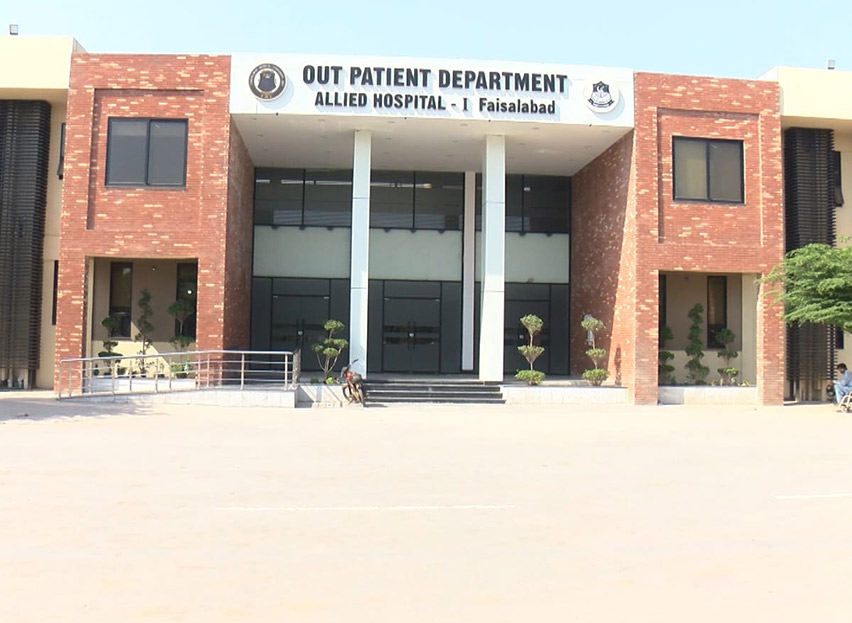
Allied Hospital Faisalabad (Tertiary/Teaching Hub)
Premier government-owned multi-specialty tertiary teaching hospital affiliated with Faisalabad Medical University, serving as the primary referral hub for central Punjab. 1,633 authorized beds, often operating at 130% capacity in peak seasons.
Key stats: 3,800+ OPD patients daily, 1,500+ concurrent inpatients, 36 clinical departments. Burn Center, dialysis with transplant capability, CT/MRI diagnostics. ~52% specialist vacancy gap and ~45% medicine stockout cycles reported.
Bears the full tertiary load for Jhang, Chiniot, and Toba Tek Singh — the only district with teaching hospitals in the division.
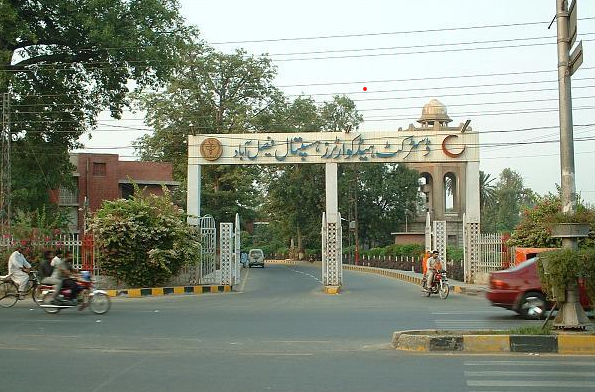
DHQ Hospital Faisalabad
Adjacent to Allied Hospital under the Faisalabad Medical University network. 570 beds serving as urban relief for general medicine, emergency care, and infectious disease programmes.
Four medical units, general surgery blocks, isolation wing (Dengue, Covid-19, TB), 24/7 endoscopy and trauma blocks, regional dialysis centre.
Part of the division’s overloaded tertiary cluster alongside Allied Hospital and specialized institutes (Cardiology, Children’s Hospital).
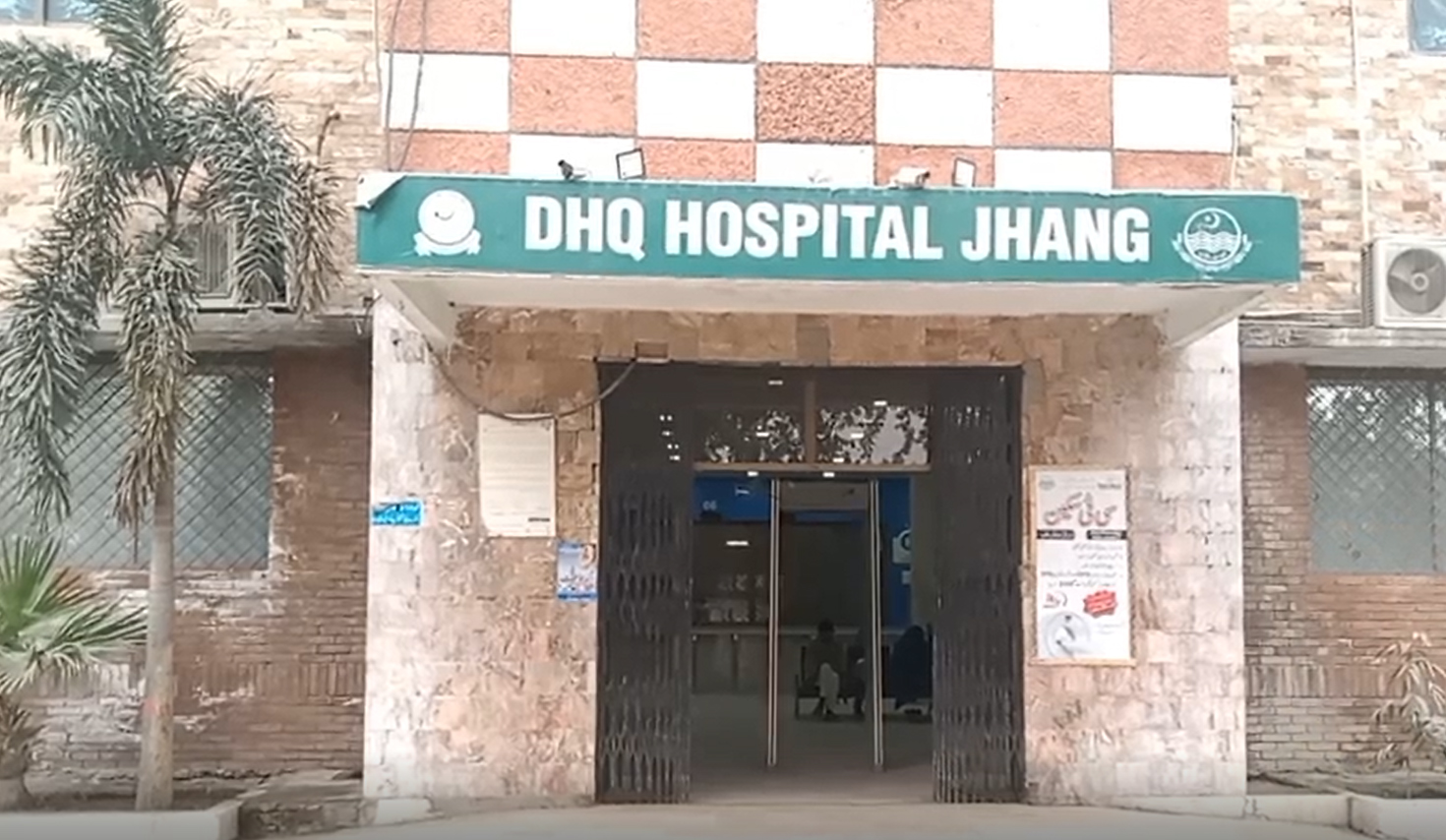
DHQ Hospital Jhang (incl. Trauma Centre)
Primary secondary-care facility for Jhang District (~3.06 million catchment). 275 beds plus a 40-bed Trauma Centre integrated under IDAP.
Key services: 24/7 emergency, gynecology, pediatrics, general medicine and surgery, 11 OPD clinics. Stabilizes riverine emergencies before Faisalabad referrals.
No teaching hospital in district; infant mortality ~64 per 1,000 live births; beds per 1,000 ~0.31.
DHQ Hospital Toba Tek Singh
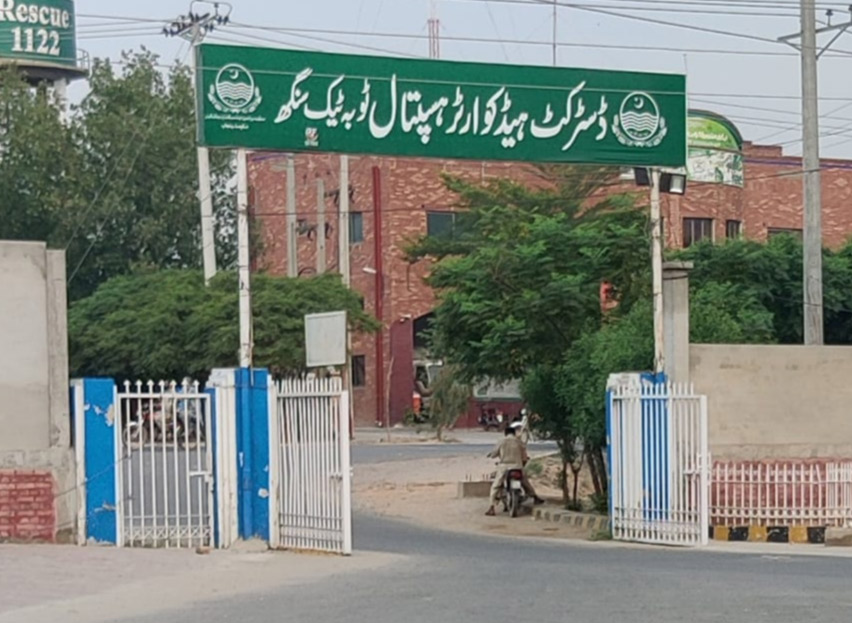
Central referral for Toba Tek Singh, Gojra, and Kamalia (~2.52 million population). 250 beds operational capacity, revamped under IDAP.
Expanded dialysis blocks, modular operation theatres, enhanced neonatal care. All specialized cases redirected to Faisalabad (~0.44 beds per 1,000 locally).
No medical university or teaching hospital within district boundaries.
DHQ Hospital Chiniot
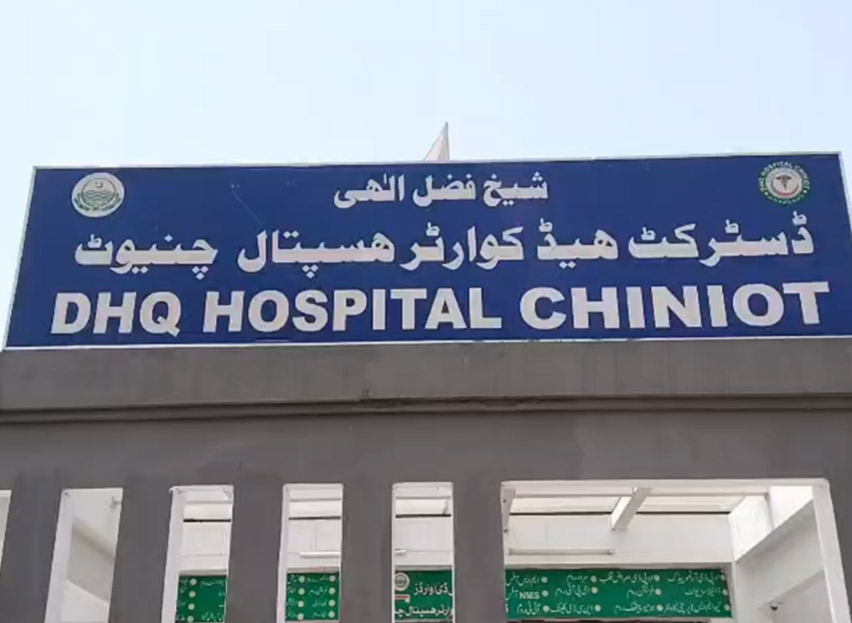
Core secondary facility for Chiniot District (~1.56 million population). 160 beds (expanded from historical baseline), undergoing IDAP revamping for critical care, trauma, and maternal-fetal wards. Lowest bed density in division (~0.31 per 1,000); infant mortality ~58 per 1,000. No tertiary facility — complex cases diverted to Faisalabad.
Punjab health budget
Punjab health sector allocations fund primary/secondary care, DHQ/THQ revamping, and specialized projects including Allied Hospital & FMU upgrades.
| Item | Amount (indicative) |
|---|---|
| Punjab health sector (total) | Rs. 630.5 Billion |
| Development (ADP) | Rs. 181–182 Billion |
| Non-development (Non-ADP) | Rs. 450.0 Billion |
| Divisional secondary care allocation band | Rs. 65–85 Billion |
| Allied Hospital & FMU revamping | Rs. 5.2 Billion |
Faisalabad Division receives share within provincial envelopes; exact annual split varies.
Health sector — Faisalabad Division challenges
Health overload
Healthcare facilities across Faisalabad Division are heavily burdened by a population exceeding 16 million, resulting in overcrowded hospitals, long waiting times, and shortages of beds, doctors, and emergency services — particularly in public-sector facilities.
28% of the population lacks access to basic health facilities; beds per 1,000 estimated at ~0.57 division-wide (hub ~0.72, rural districts as low as 0.31).
Child health crisis
- Infant mortality: ~60–62 per 1,000 live births (division proxy); Jhang ~64, Chiniot ~58.
- Under-5 mortality: ~68.9 per 1,000 live births.
- Stunting (under 5): 38.3% division-wide; division indicator 32.4%.
- Wasting (under 5): 10.1%.
- Health professionals: ~0.8–1.1 per 1,000 people.
Tertiary care concentration
All teaching hospitals (Allied Hospital, DHQ Faisalabad, Government General Hospital Ghulam Muhammad Abad) are in Faisalabad District only. Jhang, Chiniot, and Toba Tek Singh have zero teaching hospitals — complex trauma, maternal emergencies, and specialized care are forced onto long transit routes to Faisalabad, contributing to elevated rural infant mortality.
Rural access gaps by district
| Gap area | Faisalabad | Jhang | Toba Tek Singh | Chiniot |
|---|---|---|---|---|
| Beds per 1,000 | ~0.72 (overloaded hub) | ~0.31 | ~0.44 | ~0.31 |
| Tertiary access | Saturated Allied/DHQ cluster | No teaching hospital | No teaching hospital | No tertiary facility |
| Safe drinking water | 42% lack biologically safe water (urban/industrial) | 45% filtration plants non-functional | 48% lack safe water | 42% rural without safe water |
| Referral pressure | All three rural districts depend on Faisalabad for tertiary and specialized care | |||
Allied Hospital Faisalabad — gaps
Operating at up to 130% capacity, with ~52% specialist vacancy in allied regional posts, ~45% non-development stockouts on specialized medicines, and Rs. 5.2B revamping programme underway to expand trauma and neonatal blocks.
Key overall gaps
- Health overload: 16M+ population on 660 facilities; long waits and bed shortages.
- 28% lacking basic health: Uneven rural coverage vs urban Faisalabad hub.
- Low bed density: ~0.57 beds per 1,000 vs national needs; rural districts critically low.
- Child health crisis: High infant and under-5 mortality; stunting 38.3%.
- No rural teaching hospitals: Jhang, Chiniot, Toba Tek Singh entirely dependent on Faisalabad referrals.
- Water & pollution: Industrial textile waste contaminates groundwater; 45% filtration plants non-functional.
Data from Faisalabad Division health sector profile, Punjab health statistics, and district government reports (~2023–2025).